Sustainable Furniture and Style for Your Home

Image caption: Sustainable furniture lifecycle
Sustainability is an increasingly important consideration for both designers and consumers, with the interior design sector embracing the ethos of reduce, reuse and repurpose. When it comes to furnishing your home, there are some truly amazing brands delivering eco-friendly yet stylish options, such as cushions made from plastic bottles and candle holders made from decommissioned fire hoses. There are also plenty of opportunities to source second-hand items and give them a new purpose through upcycling.
What Do We mean by Sustainable Furniture?
Sustainable furniture, or eco-furniture, is designed and made with longevity in mind. It typically uses responsibly sourced or recycled mate rials, is built to last, and has a lower environmental impact throughout its lifecycle.
Why Buy Sustainable Furniture?
The Environmental Impact
Making furniture requires materials, energy and transportation, which can use natural resources and generate carbon emissions. Choosing furniture made from responsibly sourced, recycled or reclaimed materials can help reduce waste, conserve resources and lower demand for new manufacturing. By selecting well-made pieces that last longer, homeowners can also reduce the environmental impact associated with replacing furniture more frequently.
The Personal Impact
The benefits at home for choosing eco-friendly furniture include:
Choosing furniture with low-emission finishes can help reduce airborne pollutants in your home. This improves indoor air quality, particularly in well-insulated homes.
- Durable, well-made furniture lasts longer, reducing the need for frequent replacements.
- Timeless designs are more likely to be reused, refurbished or resold rather than discarded.
- Together, these qualities help reduce waste and support a more sustainable approach to furnishing your home.
How to Choose Sustainable Furniture
When shopping for furniture, check product descriptions and manufacturer websites for details about materials and sourcing. Look for furniture made from responsibly sourced timber, recycled metals, natural fibres and low-emission finishes.
You can often find sustainability credentials on product labels, specification sheets or retailer websites. Look out for:
- FSC or PEFC certification on timber products, which shows the wood comes from responsibly managed forests.
- Recycled content information for materials such as metal, plastic and fabric.
- Low-emission or low-VOC (Volatile Organic Compound) finishes, which release fewer pollutants into your home.
- Repairable designs, such as removable covers, replaceable parts and durable construction.
It's also worth checking whether the manufacturer provides information about where materials are sourced and how products are made. The more transparent a company is about its supply chain, the easier it is to make an informed choice.
Materials and Craftsmanship That Lower Environmental Impact
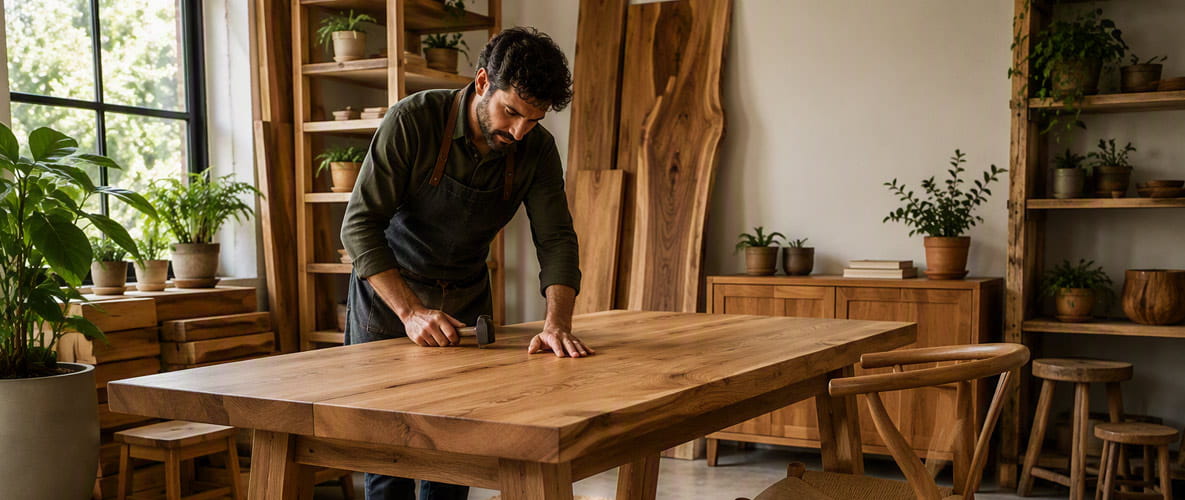
The materials used to make furniture can have a big impact on its environmental footprint. Look for solid wood from responsibly managed forests, reclaimed timber, recycled metals, and natural materials such as wool, cotton and linen. Product descriptions and labels will often tell you whether recycled or certified materials have been used.
It's also worth checking how a piece is made. Furniture that can be repaired is usually a better long-term choice than furniture designed to be replaced. Look for removable covers, replaceable cushions and sturdy fixings that can be tightened or repaired over time. Manufacturers that offer spare parts or repair services often produce furniture built to last.
Where furniture is made matters too. Choosing products made closer to home can reduce transport emissions, while some manufacturers also share information about their use of renewable energy or waste reduction practices. Even flat-pack furniture can be a sustainable option if it is well made, durable and designed to be assembled more than once.
Understanding Common Sustainability Terms
Low-VOC (low-emission) :VOC stands for Volatile Organic Compound. These chemicals can be found in some paints, varnishes, adhesives, furniture finishes and manufactured wood products. As VOCs are released into the air, they can affect indoor air quality.
FSC-certified (Forest Stewardship Council) : FSC certification shows that wood comes from responsibly managed forests. It helps protect wildlife, supports local communities and ensures forests are managed for the long term.
PEFC-certified (Programme for the Endorsement of Forest Certification) : PEFC certification also indicates that timber has been sourced from sustainably managed forests. It is one of the world's largest forest certification systems and helps ensure forests are replenished and protected for future generations.
Reclaimed wood : Timber that has been recovered from older buildings, furniture or structures and reused, reducing the need for newly harvested wood.
Choosing and Caring for Furniture at Home
Thoughtful, room‑by‑room choices complement energy‑efficient, low‑toxicity interiors:
- Living rooms: Certified timber frames with natural fibre upholstery and low‑VOC stains. Consider modular sofas with removable, washable covers in linen or organic cotton.
- Dining areas: Solid wood tables with hardwearing oil finishes, paired with recycled metal chairs or timeless wooden seating. Cork or wool‑blend rugs certified for low emissions add warmth.
- Bedrooms: Slatted timber bed bases, natural mattresses (latex, wool or cotton), and bedside units in untreated or lightly finished wood.
- Home offices: Modular desks with recycled steel frames and durable timber tops; opt for cable‑management and finishes designed to minimise off‑gassing.
Simple care extends lifespan and preserves beauty. Dust with microfibre cloths, use pH‑neutral cleaners, and re‑oil or wax wood periodically. Rotate cushions, tighten fixings annually and repair small fabric tears early. These simple steps can help furniture stay in use for longer.
Sustainable Furniture Ideas to Buy
Here are some innovative examples of sustainable furniture and home accessories available today.
1. Repurposed Rugs
Not only are these colourful rugs hard-wearing, stain-resistant and easy to wipe down—making them the perfect addition to your kitchen, patio, or family dining area—they’re also sustainable.
They’re made from recycled plastic bottles (that would otherwise end up in the oceans or a landfill), which are processed with heat and recycled water to make a soft yet robust yarn.
The team at Jennifer Manners then hand-knots the fibre to make top-quality rugs that will brighten up any space.

2. Recycled Vases
LSA International teamed up with Cornwall’s Eden Project to create a beautiful range of vases, Canopy, which are made from recycled materials.
Melted-down bottles and jars are then remoulded, giving the regenerated vases unique variations of small bubbles, so each vase is a one-off.
These contemporary pieces are perfect for displaying flower arrangements.

3. Plastic Bottle Cushions
Heal’s has a number of sustainable lines, from tables and chairs crafted from recycled fi shing nets to upholstery made from recycled fashion.
Its Way Outdoor Range from Ferm LIVING includes pieces that are each handwoven from recycled plastic bottles.
Cushions such as this monochrome pattern can be used indoors or outdoors and are perfect for enhancing a seating area.

4. Fire-Hose Candlesticks
These solid brass candlestick holders, made from genuine decommissioned fi re-hose couplings, are bound to be a talking point at your next dinner party.
The rare and limited-edition pieces have been lovingly restored by Elvis and Kresse after they were rescued from an old oil rig, after many years fighting fi res at sea.
Unique and full of history, the candlesticks will add a touch of style to your table. Plus, 50% of profits from sales go to The Fire Fighters Charity.

Charity Shop Finds and Upcycling Ideas
Sustainable furniture doesn't always have to be bought new. Charity shops, architectural salvage yards, local marketplaces and community sharing platforms such as Freegle can be great places to find well-made items ready for a second life.
Small changes, such as replacing handles, updating upholstery or refinishing timber, can give older furniture a fresh purpose while supporting a more circular approach to home design.

- Update a charity shop dining table with sanding and a low-VOC paint or oil finish.
- Reupholster a vintage armchair using natural fabrics such as linen or wool.
- Repurpose mismatched chairs with a coordinated paint colour to create a distinctive dining set.
8 Ways to Give Old Furniture and Household Items a New Purpose
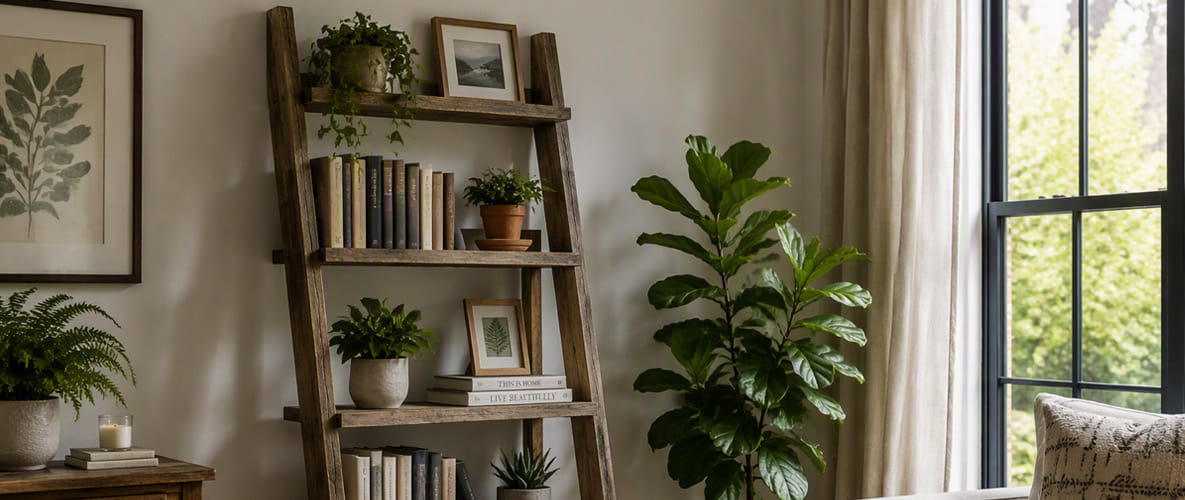
A little imagination can transform an overlooked piece into something practical and unique for your home.
Upcycled furniture ideas:
1. Ladder → bookshelf : Convert an old ladder into a bookshelf, blanket stand or plant display.
2. Suitcase → bedside table : Stack two vintage suitcases or add legs to a larger case to create a bedside table with hidden storage.
3. Trunk → coffee table :Use an old trunk or wooden crate as a coffee table with hidden storage.
4. Old window frames → mirrors or wall art :Reclaimed frames can add character and architectural interest to a room.
5. Mason jars and glass bottles → lighting or storage : Use for kitchen storage, vases, candle holders or decorative lighting.
6. Old table → Fold-down desk : Adapt a charity shop dining table into a compact workspace by shortening it or creating a wall-mounted fold-down desk.
7. Bar cart → plant stand : Repurpose a second-hand drinks trolley as a mobile indoor garden for herbs and houseplants.
8. Record cabinet → home office storage :Mid-century cabinets and sideboards often make excellent printer stations or work-from-home storage units.
Stylish, Sustainable Homes with Berkeley Group
The Berkeley Group’s approach to sustainability is to develop the homes and places of the future without compromising the ability of younger generations to meet their needs. We build on brownfield sites, reviving neglected, underused land, and build homes that are sustainable and that support nature.
Learn more about the energy efficient features in our new homes or explore our available properties.
Sustainable Furniture FAQs
Is sustainable furniture more expensive?
Where can I find second hand furniture near me?
Where can you buy reclaimed wood furniture?